EVOLVE ISSUE 13
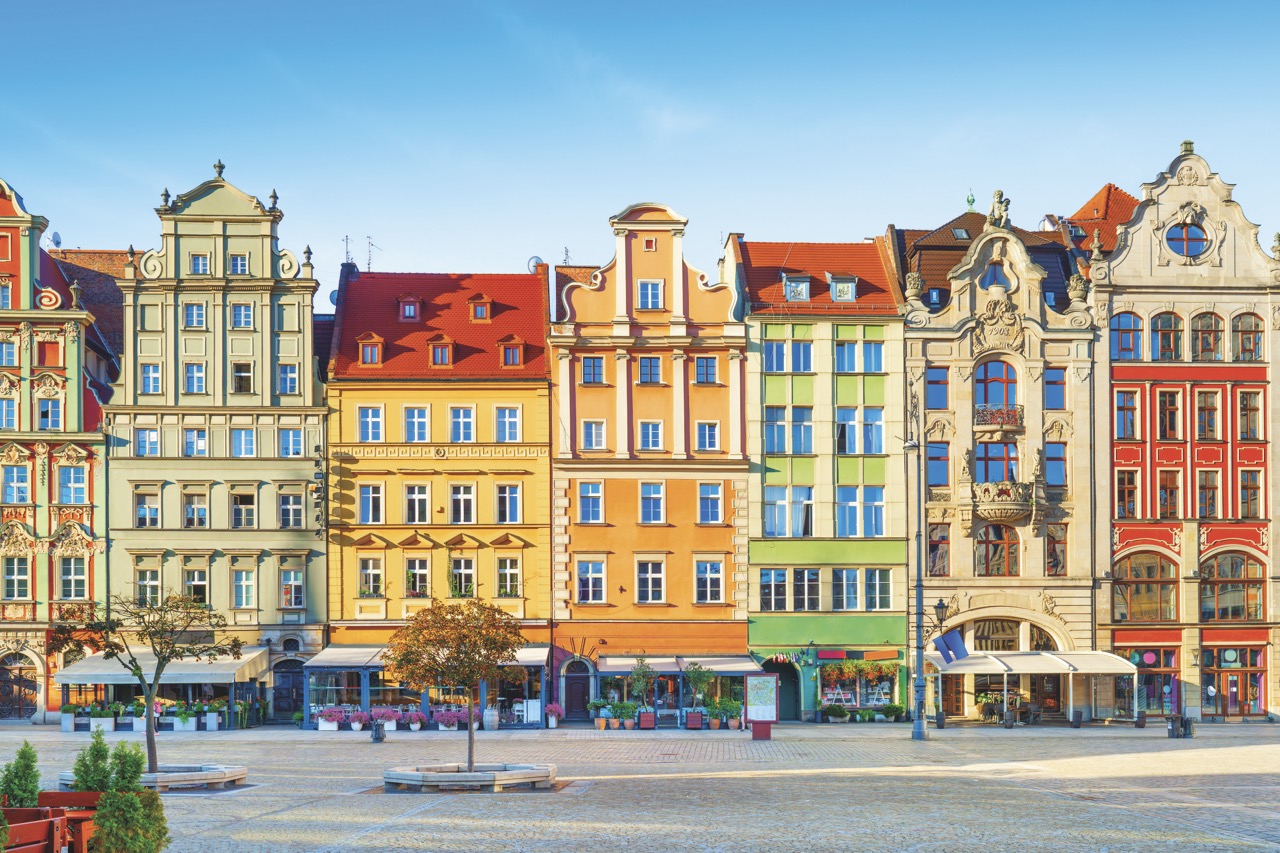
The ties between Italy and Poland have deep roots, dating back to the Renaissance and strengthened during the industrial era. "Even before 1989, despite the difficulties of the political context, there were important industrial relations between the two countries, "recalls Antonio Gallo, Managing Director of KTI Poland S.A. "Many people think of the Fiat 126, which was licensed for production in Poland, but the refineries in Płock and Gda,sk were also designed and built largely by Italian engineering companies, such as Snamprogetti and later Tecnimont and KT. Some of these projects, such as the polyolefin complex built by Tecnimont in Płock in the early 2000s, represented a milestone in the development of the Polish petrochemical industry. It is a legacy that is part of our identity and remains valuable in our relationships with customers today."
KTI Poland was officially established in 2006 as a subsidiary with its headquarters in Płock and an office in Warsaw. "Our story began as the result of an initiative by Technip KTI Roma "now known as KT), " explains Gallo. "Then, after the 2008 crisis, we went through a complex time, but also a period of growth under two different owners. In 2024, we rejoined the MAIRE Group through KT Roma: a return to our origins that has given us new strength and increased potential. "
Today, the company has around 200 professionals, with skills ranging from civil to electrical engineering, and from piping to mechanics and processes. "We are rooted in the industrial heart of Poland, across from the large refinery in Płock. This location allows us to engage in daily contact with the leading players in the sector. "
The integration with MAIRE was a crucial step. "We no longer limit ourselves to projects that KTI Poland can manage independently. Today, we represent MAIRE in Central and Eastern Europe, bringing not only our engineering capabilities to the local market, but also the Group's advanced technologies and solutions, particularly in the sphere of the energy transition. "
An evolution that has translated into concrete projects. "The visbreaking plant that went into production in 2025 was an important milestone: a -250 million plant, built entirely by KTI Poland, which demonstrates our ability to manage complex projects to the full satisfaction of the customer. It is also a plant capable of increasing the conversion of residues from distillation units to obtain lightweight products, which helps increase the efficiency of the refinery and reduce its carbon footprint."
In addition to this, the company is engaged in a consortium with Polimex for the new olefins complex. "It is the largest investment in Europe of its kind in the last 20 years, a project of about 8 billion euros. Our project, in the order of 1 billion euros, centers on the interconnecting of the complex. We have a significant role to play in this project that will redraw the industrial map of the region."
A strategic energy hub
The energy context in which KTI Poland operates is rapidly evolving. "Poland still produces 57% of its energy from coal, " explains Gallo. "To reduce this dependence, the country has launched a program of investments worth over -13 billion per year, with an intermediate transition to gas and a strong push towards renewables and nuclear power."
Among the most innovative projects are the small modular reactors "SMRs). "The first SMR site will be built in Włocławek, right next to Płock, with commissioning scheduled for 2035. It is a viable project, supported by Orlen and large industrial groups such as Synthos. It is a choice that has the potential to change Poland's energy landscape. "
Alongside the transition, Poland is strengthening its geopolitical role. "The LNG regasification plant in .winoujście, on the Baltic Sea, whose detailed engineering, permitting, and 3D modeling were developed by KTI Poland itself, covers half of the country's gas needs. The Baltic Pipe connects the country to Scandinavia. Orlen has announced investments of -80 billion by 2035, most of which will go towards new technologies. Poland is already a strategic energy hub, and it offers MAIRE a natural opportunity. "
One eye is also on the future, beyond the country's borders. "When, hopefully, the conflict in Ukraine ends, Poland will be at the forefront of reconstruction. Companies based here will play a decisive role because
they know the territory and industrial dynamics, and will be able to make a solid and
reliable contribution."
TODAY, WE REPRESENT MAIRE IN CENTRAL AND EASTERN EUROPE, BRINGING NOT ONLY OUR ENGINEERING CAPABILITIES TO THE LOCAL MARKET, BUT ALSO THE GROUP'S ADVANCED TECHNOLOGIES AND SOLUTIONS.
Human capital and local roots
In addition to industrial and geopolitical considerations, the choice for Poland is based on human capital. "Poland has exceeded the European average for the number of graduates in the 25-34 age group: 46% compared to 43% in Europe. It is an extraordinary pool of excellence, with a strong female presence in the technical professions and an increasing number of internationally recognized professionals. For an engineering company like ours, it means being able to count on resources of the highest level."
The connection with the local territory also translates into collaborations with academic institutions and associations. "We have well-established relationships with the Warsaw University of Technology and its Płock campus. We are active members of the Polish Federation of Chemical Industries and are sponsors of its events. After almost twenty years, we feel like an integral part of the country's industrial and social fabric."
Looking ahead, Gallo has no doubts: "Poland is a country that has been experiencing ongoing and consistent growth, with its GDP increasing by an average of 4% per year over the last thirty years. It possesses extraordinary human capital, a strong industrial vocation, and a regulatory framework that values European companies. In this scenario, MAIRE has everything it needs to grow alongside the country and contribute to its energy transformation."
APOLLO: THE POWER
OF COLLABORATION