AS PART OF THE MILANO MUSEOCITY 2026 PROGRAM, THE MAIRE HISTORICAL ARCHIVE OPENS ITS DOORS TO THE PUBLIC AND EXPLORES HOW SPORTS HAVE TRANSFORMED REGIONS, COMMUNITIES, AND CULTURE.
There comes a moment when a line drawn on paper ceases to be a technical marking and becomes a space, an encounter, a collective experience. It is precisely this transition that gave shape to "Engineering on the Move: Sports Venues from the MAIRE Historical Archive." An exhibition that, rather than simply displaying documents, connects them to people and their lived experiences, transforming drawings, sketches, and designs into stories that transcend time.
"Engineering on the Move" was created to give voice to a design heritage that, though often invisible, has played a decisive role in building not only infrastructure but also relationships, habits, and shared imaginations. The exhibition is part of the Milano MuseoCity 2026 program, the annual initiative that transforms the city into a vast, open-air museum, fostering dialogue among cultural institutions, archives, businesses, and places not normally accessible to the public.
For the first time, the Fondazione MAIRE – ETS participated in this circuit by opening the MAIRE Historical Archive, a legacy of the FIAT Engineering experience (acquired by MAIRE in 2004) and today one of the most significant corporate engineering archives in Italy and the world. Within the grounds of the MAIRE headquarters at the Garibaldi Towers, in the heart of Milan, this heritage took shape in an exhibition itinerary reflecting the theme chosen for the 2026 edition, "Cultural Enterprises," interpreted to highlight the connection between sports and art. A theme that finds concrete expression throughout the exhibit: enterprise not only as an economic actor, but as an entity capable of producing culture, vision, and memory.
The exhibition itinerary
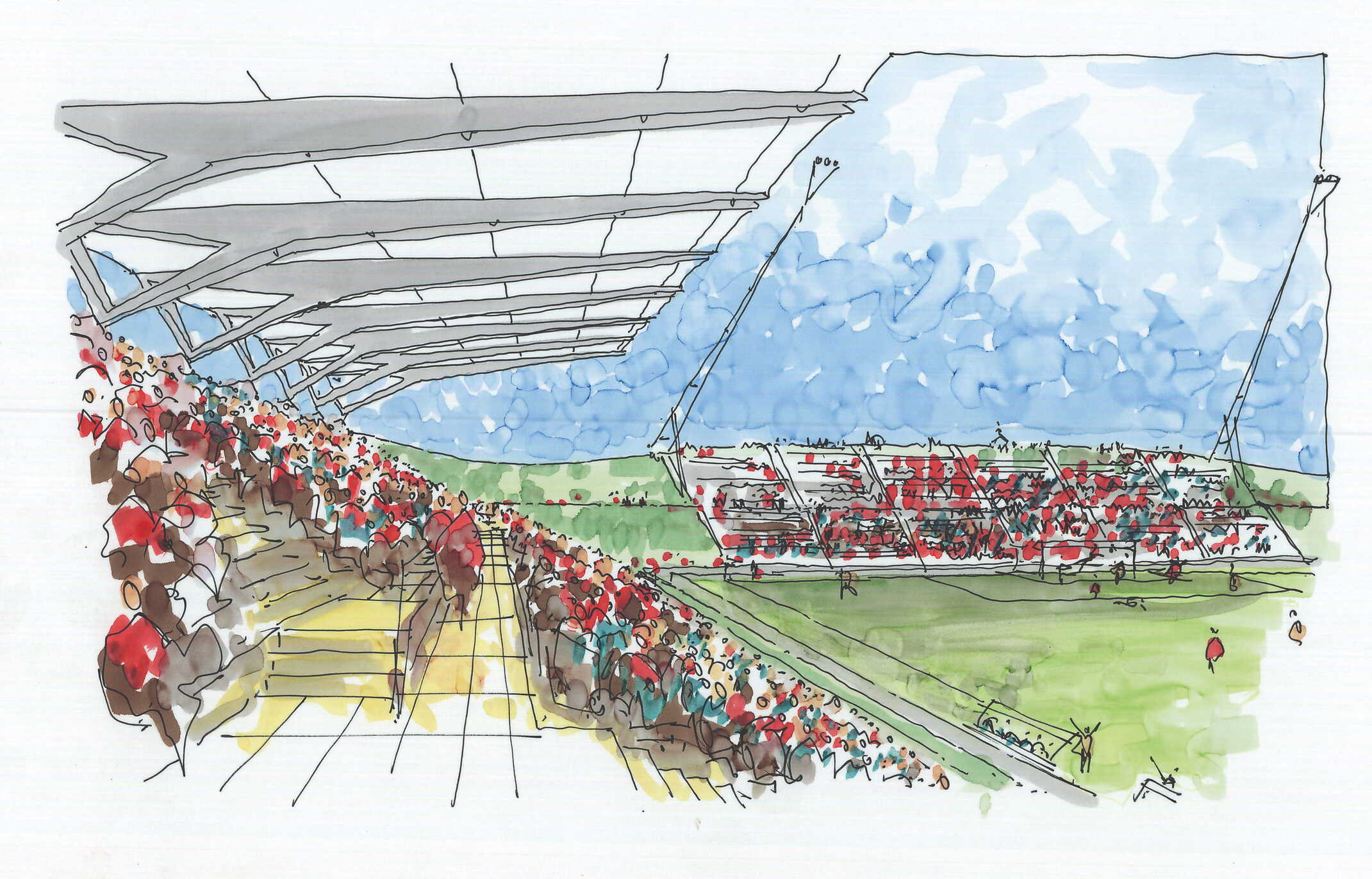
The heart of the exhibition unfolds as a journey that is both thematic and chronological, traversing some of the most significant experiences of 20th-century Italy. From the FIAT workers' club to the stadiums, which were never built, in Venice and Genoa. From the original design of the Albergo Duchi D'Aosta in Sestriere to the redevelopment of the Palavela in Turin, an example of architecture capable of standing the test of time and transforming itself while maintaining its symbolic power intact. Here we see the role of engineering working in depth, translating needs and visions into concrete, livable spaces. Functional infrastructure thus becomes a space for cultural interaction, generating experiences, identity, and collective memory.
Alongside the exhibition itinerary, the show also introduces an experiential component that expands the way visitors engage with archival materials. Thanks to collaboration with universities and research centers, one of the most significant projects – that of the Palavela – has been brought to life through an immersive 3D experience: from technical documentation to digital reconstruction. The Palavela, an iconic structure of Italian architecture, thus becomes the case study for a broader narrative. Its history – divided into two phases, from its original function linked to the Turin '61 celebrations to its transformation into an ice stadium in 2005 – has been made explorable through an interactive three-dimensional model.
Visitors can move within the space, observe the various construction phases, and access informational and visual content documenting two key moments: the 1960s construction site with its original configuration, and the subsequent conversion. A journey that highlights architectural evolution, as well as the evolution of technologies and construction methods over time.
An exhibition experienced by the public
Far beyond the specialist sphere, the public's response confirmed the exhibition's ability to spark widespread interest. During the opening days, over 300 people – including colleagues, outside visitors, and families – took part in guided tours, transforming the exhibition into a shared experience. On several occasions, the contents on display sparked personal memories and testimonials: stories from those who had experienced some of those projects firsthand or had encountered them during their professional careers. This element further enriched the narrative, adding a human dimension to the technical account.
The exhibition thus took on a participatory dimension, in which the Historical Archive transformed from a place of preservation into a space for dialogue. After the conclusion of the official Milano MuseoCity program, the exhibition remained open to MAIRE colleagues, extending the experience and strengthening the link between corporate identity and historical memory.
"Engineering on the Move" does not merely offer a glimpse into the past but prompts reflection on the transformations currently underway. The themes shaping the sector today – sustainability, digitalization, accessibility, and new ways of experiencing sports – find a concrete starting point in the experiences recounted, rooted in the design history of the 20th century. In this sense, the Archive is not just a place of preservation, but a tool for interpreting the present and shaping the future. A heritage that, once made accessible, becomes a cultural lever and an opportunity for awareness.
RETHINKING OUR RELATIONSHIP WITH WORK