Fondazione MAIRE presents its “Climate Goals” research on energy transition in the frame of Nextchem Symposium at The Hague
PRESS RELEASE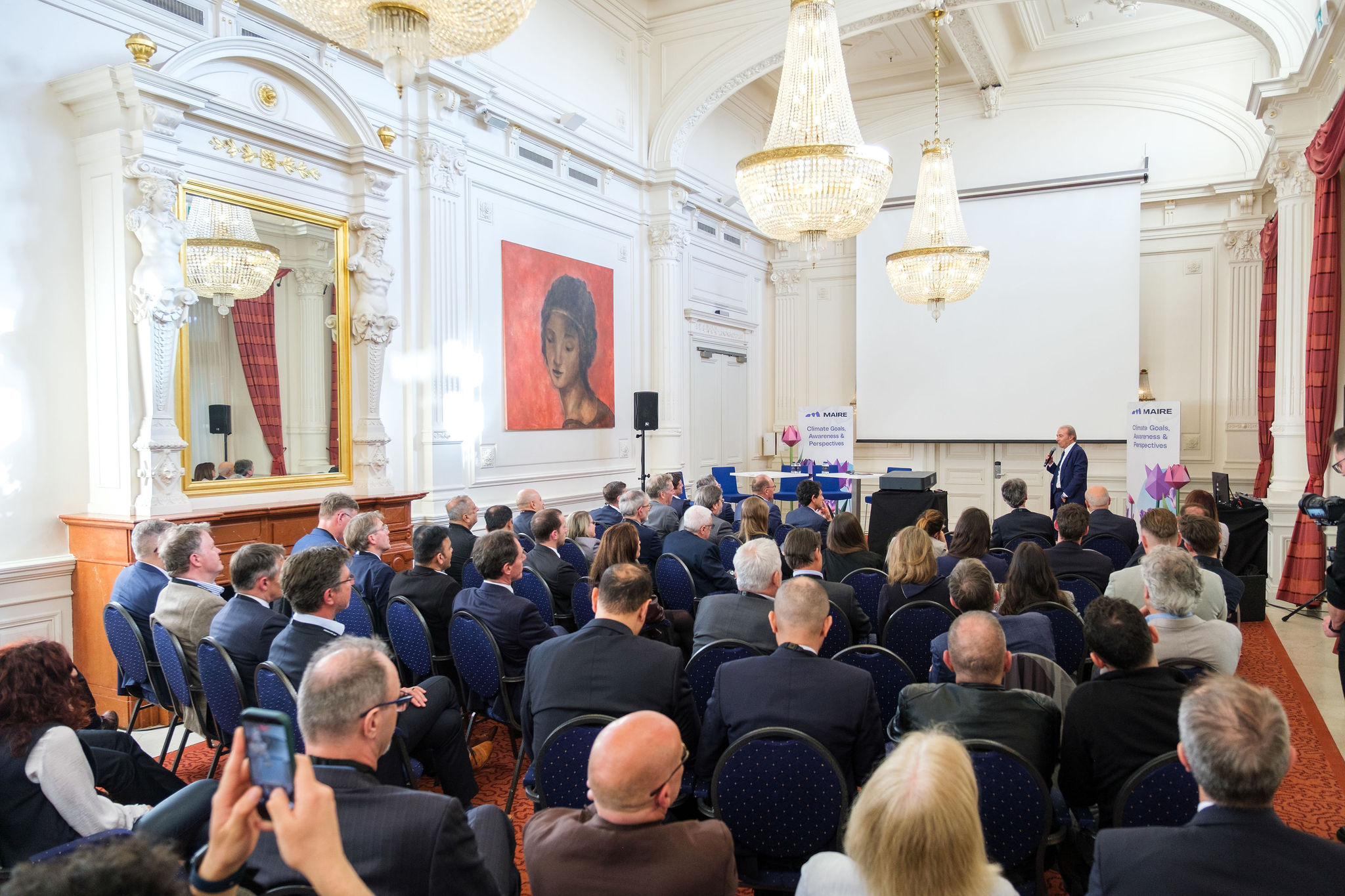
FOCUS ON THE NETHERLANDS, INSTITUTIONS ASKED TO ACT AS FINANCIAL ENABLERS TO OVERCOME COST CONCERNS
- The study by Fondazione MAIRE – ETS with Ipsos Doxa has been monitoring public awareness of the energy transition worldwide since 2023 involving 2,850 individuals and 25 experts from 17 countries
- In the Netherlands, the energy transition is no longer just about energy – it’s reshaping the economy. Awareness is near universal (98%), with 59% saying they know the topic well
- Institutions are asked to play a role to boost the energy transition, funding new technologies, offering incentives, investing in the development of alternative fuels for sustainable mobility. Business is seen as the main driver and should focus on adopting new production processes (39%) and innovating products and services in a sustainable way (55%), yet 43% say efforts are inadequate. Fabrizio Di Amato: “The energy transition is unstoppable; MAIRE can contribute to it through its European platform of technology and execution capabilities”
The Hague, 19 May 2026 – In the frame of Nextchem Symposium at The Hague, the international event dedicated to sustainable fertilizers, Fondazione MAIRE – ETS presents the results of the fourth edition of “Climate Goals: winning the challenge of climate goals through the creation of skills and competences worldwide” (Addendum 3), featuring a dedicated focus on the Netherlands, one of Europe’s most mature yet most demanding markets in assessing the energy transition. The study – promoted by Fondazione MAIRE – ETS and carried out with Ipsos Doxa with the support of MAIRE – has been monitoring since 2023 public awareness and consciousness on the energy transition worldwide, looking beyond low- or zero-emission energy production to include the transformation of industrial processes, products, business models, distribution and consumption patterns, and the creation of necessary skills and competences.
The research draws insights from 2,850 individuals and integrates the views of 25 experts in 17 countries across 4 continents: Qatar, Saudi Arabia and the UAE for the Middle East; India, China, Azerbaijan, Kazakhstan and Turkey for Asia; USA, Chile and Argentina for the Americas; Algeria in Africa; Germany, Italy, Poland, The Netherlands and UK for Europe.
The Netherlands frames the energy transition not as a purely technological shift, but as a broad economic and industrial transformation shaped by financial innovation and circular models. Awareness is near-universal (98%) and 59% say they are “very familiar” with the topic; key motivations remain climate (35%) and publichealth (30%), while 33% expect net jobcreation in sustainable sectors. A clear short-term realism also emerges: 50% believe that in the next 1-3 years costs will outweigh benefits, reflecting an “upfront investment” phase.
Respondents see a role for Institutions to mitigate these costs, by funding new technologies and offering subsidies and incentives to help the transition. At the same time, they see business as the main operational driver (57%), while expectations remain high, with 43% judging current corporate efforts as inadequate. Priority areas align with perceived national strengths: green chemistry (43%), solar and wind (42%), and ICT/digital solutions (33%). Human capital is central: 75% point to a “hybrid professional” combining technical expertise (renewables 47% and recycled materials 47%) with advanced cognitive skills (critical thinking 57%, problem solving 56%). While 70% recognize the need for upskilling, the preferred approach is structural and medium-term, with 41% indicating a 2–3year timeframe to embed new competencies.
The event saw the participation of H.E. Ambassador Augusto Massari, Ambassador of Italy in the Kingdom of the Netherlands for an institutional welcome; Mark Schmets, Ministry of Economic Affairs and Climate; Pejman Djavdan, CEO Stamicarbon; Ilaria Catastini, General Manager, Fondazione MAIRE – ETS presented the results, followed by a panel composed of Fabio Fritelli, Managing Director of Nextchem; Gert Jan de Geus, CEO OCI Nitrogen; Ralph Koekkoek, CEO Blue Circle Olefins; Theo Bovens, member of the Senate (Eerste Kamer) of the Dutch Parliament, with Esther van Rijswijk, as moderator. Fabrizio Di Amato, Chairman and Founder of MAIRE and Fondazione MAIRE – ETS, closed the event with his final remarks.
MAIRE is a leading engineering group providing technology solutions and project execution in the downstream segment of energy services, as well as in the chemical and fertilizers industries, with 10.800 employees in 50 countries. The Group can count on a well rooted presence in the Netherlands through NEXTCHEM and its subsidiary Stamicarbon, a Sittard-based company and a global leader in fertilizer technologies. NEXTCHEM, the technological arm of MAIRE Group, provides proprietary technology solutions for the decarbonization of the energy industry, thanks to its comprehensive portfolio of technologies and intellectual property for sustainable fertilizers, low carbon energy vectors and circular economy.
Fabrizio Di Amato, Chairman of MAIRE and Fondazione MAIRE – ETS, remarked: “The Netherlands stands out for near‑universal awareness of the energy transition, confirming that the discussion has moved beyond ‘why’ to the far more demanding question of ‘how’. The data also underlines the urgency: the energy transition is unstoppable, and today credibility depends on closing the gap between expectations and delivery, turning awareness into measurable progress through investment, innovation and skills. MAIRE can contribute to the new energy scenario through its technology and execution capabilities. Today we reaffirm our commitment from the Netherlands, where we have one of our technological hubs for sustainable fertilizers. In every single country we leverage specific industrial competences to create a real European platform, thanks to our more than 30 legal entities operating in Europe”.